
IEC 61914 Cable Cleat Standard: What Buyers Need to Know
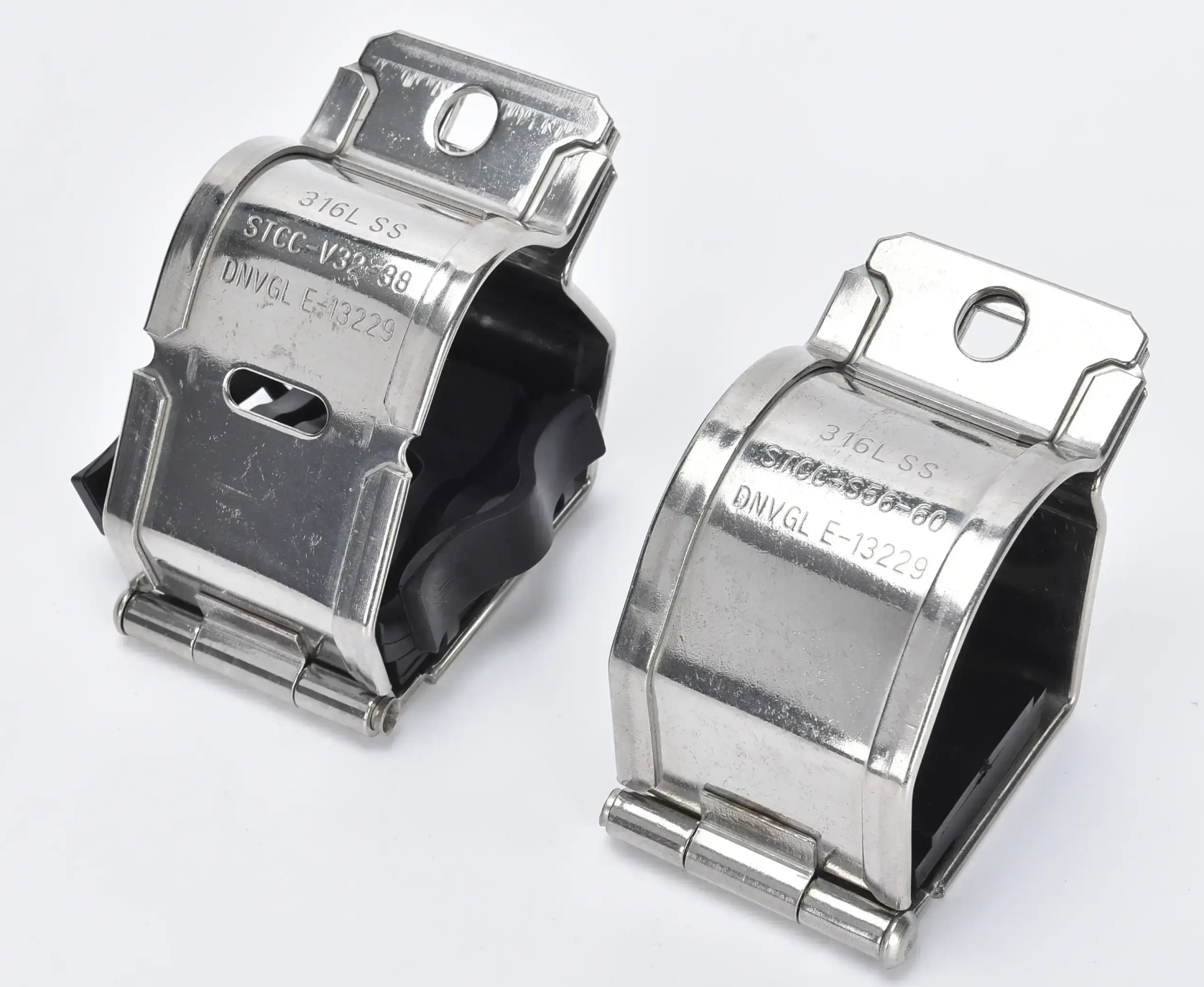
If you're specifying cable cleats for industrial projects, you've likely encountered the term IEC 61914. But what does this standard actually require, and why does it matter? This guide explains the key requirements, testing procedures, and what to look for when sourcing certified cable cleats.
What is IEC 61914?
IEC 61914 is the international standard for cable cleats for electrical installations. It defines the performance requirements, test methods, and marking for cable cleats used to secure electrical cables in industrial, commercial, and utility applications. The standard was first published in 2009 and updated in 2015.
Why Does IEC 61914 Matter?
During a short-circuit fault, cables experience enormous electromagnetic forces. Without properly rated cleats, cables can:
1. Swing violently and damage adjacent equipment
2. Abrade against tray edges, causing insulation failure
3. Pull free from terminations, causing arc flashes
4. Cause fire propagation along cable routes
IEC 61914 ensures that cable cleats can withstand these forces and protect both personnel and equipment.
Key IEC 61914 Requirements
1. Short-Circuit Withstand Test
The core test: cleats must restrain cables during a simulated short-circuit event. The test declares:
- Peak current rating (kA)
- Cable size range that can be secured
- Maximum spacing at which the cleat is effective
- Time duration the fault can be withstood
2. Mechanical Strength Test
Cleats must withstand static and dynamic mechanical loads without fracture or permanent deformation.
3. Corrosion Resistance
For outdoor or harsh environments, cleats must pass salt spray testing to verify corrosion resistance. Stainless steel (304/316) cleats typically perform best.
4. Temperature Resistance
Cleats must operate within declared temperature ranges without becoming brittle or deforming.
5. Electrical Properties
Non-magnetic cleats (for single-core AC circuits) must be tested to ensure they don't induce eddy current heating.
How to Verify IEC 61914 Certification
Not all cable cleats claiming "IEC 61914 compliance" are actually certified. When sourcing, ask suppliers for:
1. Actual test reports from an independent laboratory (not just a self-declaration)
2. Declared short-circuit rating in kA peak
3. Tested cable size range
4. Tested spacing (mm)
5. Certification body name (e.g., DNV, KEMA, CESI)
Common Misconceptions
Myth 1: "All stainless steel cleats are IEC 61914 certified."
Fact: Material quality alone doesn't guarantee performance. The cleat design, clamping force, and short-circuit behavior must be tested.
Myth 2: "Higher kA rating is always better."
Fact: The cleat must match your actual system short-circuit level. An over-rated cleat may be unnecessarily expensive or bulky.
Myth 3: "Plastic cleats can't be IEC certified."
Fact: Glass-filled nylon and polymer cleats can pass IEC 61914, but only for lower short-circuit levels (typically below 25kA).
JJW Electric IEC 61914 Certified Cleats
JJW Electric's stainless steel cable cleats have been tested and certified to IEC 61914 by DNV (Det Norske Veritas). Our certified range includes:
- STCC-V Trefoil (3-core) cleats: tested up to 50kA peak
- STCC-D Double cleats: tested up to 40kA peak
- STCC-S Single cleats: tested up to 35kA peak
All cleats are manufactured from 304 or 316 stainless steel, suitable for offshore, marine, and industrial environments. Test reports and DNV certification documents are available upon request.
Need IEC 61914 certified cable cleats or test reports? Contact JJW Electric.
Contact Us ← Back to News