
Cable Glands
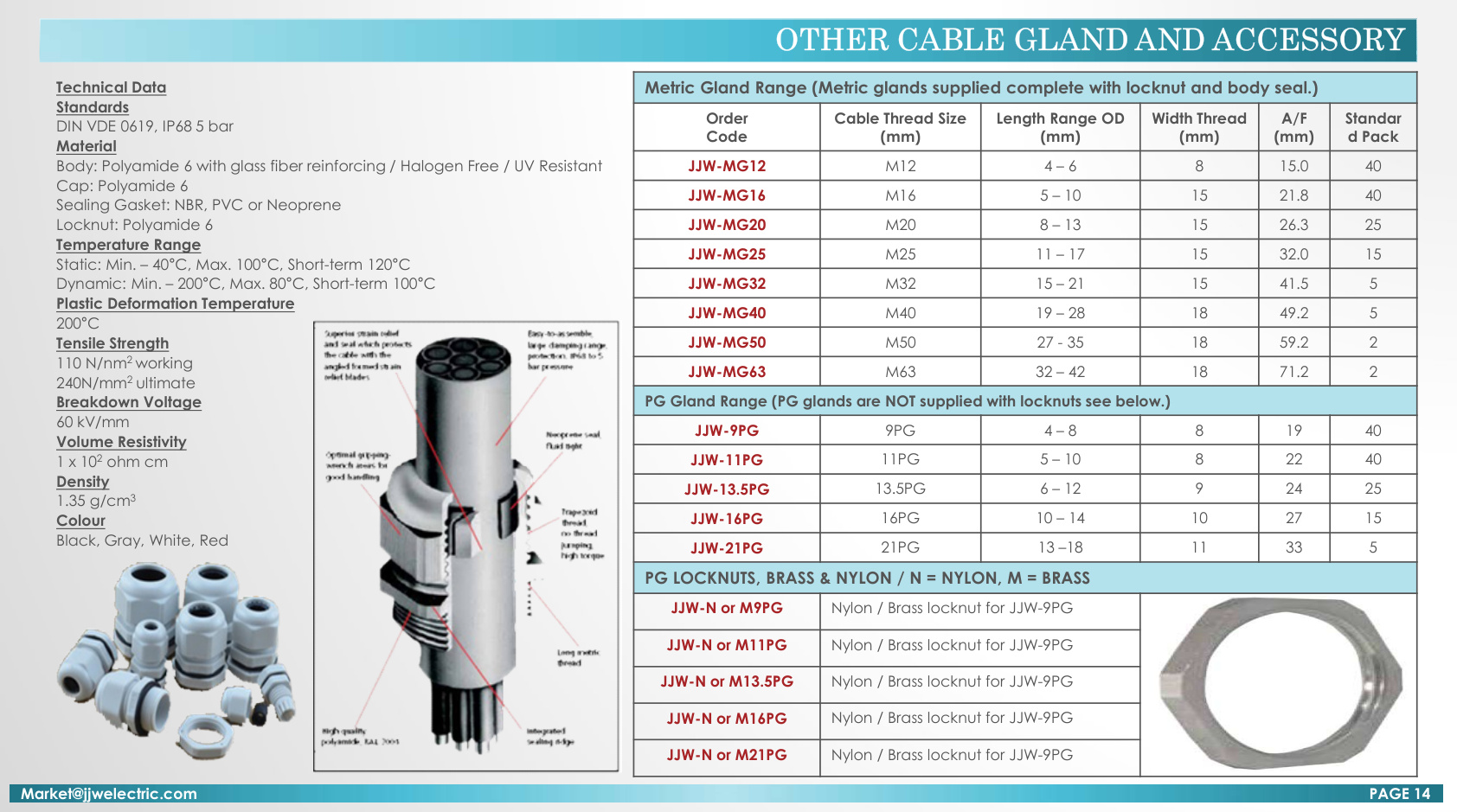
Cable glands are manufactured from polyamide 6 with glass fiber reinforcement, halogen-free and UV resistant. Available in metric (M12-M63) and PG threads (9PG-21PG), IP68 protection rating. Suitable for cable entry sealing in various industrial electrical equipment.
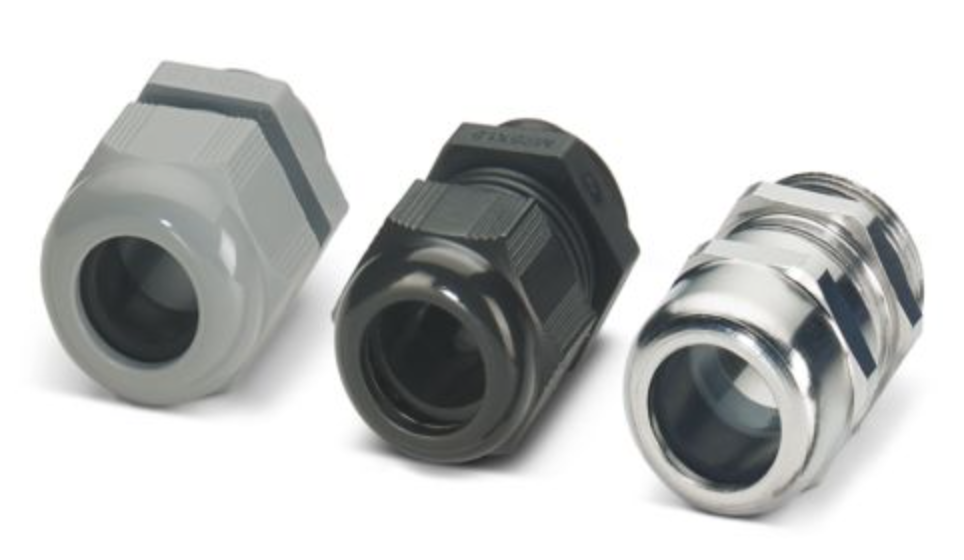
Available Types
Detailed Selection Guide
Cable glands are devices used to seal and secure cables passing through equipment enclosures, while providing dust and water protection. This series is made from polyamide 6 with glass fiber reinforcement, halogen-free and UV resistant. Compliant with DIN VDE 0619, IP68 protection rating (5 bar). Available in metric and PG thread types, multiple color options.
Metric Cable Gland
Metric thread cable glands, sizes M12 to M63, supplied complete with locknut and body seal. Suitable for IEC standard industrial equipment.
PG Cable Gland
PG thread cable glands, sizes 9PG to 21PG. Suitable for DIN standard European equipment. Locknuts sold separately.
Selection Steps
Identify Cable OD
Measure cable outer diameter range to select matching gland clamping range.
Determine Thread Type
Choose metric (M series) or PG thread based on equipment hole size. Confirm thread compatibility.
Select Color
Standard black, available in gray, white and red. Choose based on equipment appearance and environment.
Protection Requirements
Confirm environmental protection rating requirements. IP68 for outdoor and humid environments.
Installation Notes
Ensure proper seal contact with cable and enclosure. Follow torque requirements for sealing performance.
Need Cable Glands for your project? Send us your specifications for a quote.
Request Quote Contact Us →